
Ionized Air Rinser


IONIZED AIR RINSER
Waterless can cleaning | ionized air rinse system | dry container cleaning for beverage packaging lines
The CODI Ionized Air Rinser is a waterless container cleaning system that uses ionized air to neutralize static and blast dust, debris, and cardboard fibers out of empty cans and bottles before filling. Waterless cleaning cuts utility costs, prevents waterborne contamination, and eliminates wastewater management on your packaging line. The ionizer is compatible with Twist Rinsers (operating up to 100 CPM), Wedge Lowerators, and high-speed equipment like Vacuum S-Rinsers or Loop Rinsers (with speeds up to 2400 CPM). It is positioned directly downstream from the can depalletizers, where it feeds cleaned cans into a canning filler.
The CODI Ionized Air Rinser is a waterless container cleaning system that uses ionized air to neutralize static and blast dust, debris, and cardboard fibers out of empty cans and bottles before filling. Waterless cleaning cuts utility costs, prevents waterborne contamination, and eliminates wastewater management on your packaging line. The ionizer is compatible with Twist Rinsers (operating up to 100 CPM), Wedge Lowerators, and high-speed equipment like Vacuum S-Rinsers or Loop Rinsers (with speeds up to 2400 CPM). It is positioned directly downstream from the can depalletizers, where it feeds cleaned cans into a canning filler.
PRODUCT FEATURES
Static Neutralization for True Debris Release
Ionized air kills the static charge that makes dust and debris cling to can interiors. Without neutralizing the charge first, you're just blowing debris around. With it, particles release and clear completely.
Three Varieties
1. A straight compressed-air ionizer. 2. Add a blower debris hood if your environment is dusty. 3. A Blower ionizer with integrated debris capture.
No Water, No Moisture Risk
Eliminating water from the rinse step means no added dissolved oxygen, no drying requirement, and no drainage infrastructure to manage. Cleaner cans, simpler line.
Direct-Mount Integration
Mounts straight to twist rinses, lowerators, and vacuum conveyors without additional framework. An optional slider mount lets one ionizer serve multiple twist rinses if your layout calls for it.
PRODUCT INFORMATION
Waterless
Static Neutralizing
Removes particles from inside the container
Performance & Capacity
Throughput Capacity: Up to 100+ CPM standard (high-speed and multi-lane configurations available for lines running up to 1,200+ CPM)
Container Compatibility: Aluminum beverage cans (Standard, Sleek, Slim), aluminum bottles, and PET containers
Effective Cleaning Distance: Nozzles positioned 1" to 2" (25 to 50 mm) from container tops for optimal static decay and debris evacuation
Static Neutralization Method: Pulse AC corona discharge (±7,000V) utilizing Keyence high-frequency sheath-sensing technology
Ion Balance Control: Dual I.C.C. auto-balancing within ±30V
Physical Dimensions & Mounting
Construction: Heavy-gauge AISI 304 stainless steel shroud, bracketry, and blower enclosure
Mounting Integration: Pre-engineered, bolt-on mounting packages for:Twist Rinses: Standard rigid angle bracket or multi-track slider
Grip / Wedge Lowerators: Height-adjustable Joyce Jack bracketry
Vacuum S-Rinsers & Loop Rinsers: Overhead track mount with quick-disconnect clamps
Blower Enclosure Footprint: Compact standalone floor skid (approx. 24" × 24" footprint) with 3" flexible ducting to the ionization head
Utility Requirements
Pneumatic / Compressed Air:Operating Pressure: 20 to 40 PSI regulated at machine (facility supply 100–110 PSI constant)
Air Consumption: 8 SCFM clean, dry compressed air meeting ISO 8573-1:2010 Class 2
Connection: Dedicated 1/2" ID supply line to 1/4" NPT female automotive coupler
Electrical Supply (Ionizer Head & Controls):24–36 VDC (supplied directly from Depalletizer, Lowerator, or Canning Line auxiliary control panel)
110 VAC single-phase wall plug available on 3-head standalone models
Electrical Supply (Optional 1 HP Collection Blower):208–240 VAC, 3-Phase, 60 Hz, 4.2A to 6.5A Full Load
380–500 VAC / 460 VAC, 3-Phase, 50/60 Hz, 1.6A to 3.5A Full Load
Powered from host machine electrical panel (DPL or Lowerator) or dedicated breaker
Filtration Standards
Intake Filtration: 5.0-micron high-capacity particulate air filtration
Exhaust Collection Filtration: High-efficiency particulate air (HEPA) exhaust filtration
Blower & Debris Collection Systems
Positive Pressure Jet & Vacuum Exhaust Package: Dual-action system combining positive compressed air injection with a 1 HP high-flow negative pressure blower to extract and capture airborne particulates.
HEPA Particulate Collection System: Closed-loop filtration that routes evacuated debris through a secondary HEPA filter, preventing particulate from discharging into the clean packaging environment.
Mounting & Line Flexibility
Multi-Track Twist Rinse Slider Module: Sliding cross-carriage bracket that allows operators to slide a single ionizer head across parallel 12 oz, 16 oz, and sleek twist tracks during format changeovers.
Joyce Jack Vertical Adjustment Skid: Micrometer-precision hand crank jack for Lowerator and vacuum conveyor mounting, allowing instant vertical clearance tuning for different container heights.
Extended Bar Lengths & Coupled Operation: Multi-bar configurations linked via Keyence relay modules to provide continuous ionizing coverage across wide mass conveyors.
Diagnostics & Maintenance Kits
Keyence Probe Maintenance Kit: Specialty electrode cleaning tools and pre-cut alcohol swab filters for routine probe tip maintenance.
Tungsten Replacement Electrode Probes: Quick-twist replacement tungsten emitter probe pins.
Auxiliary Control Panel: Dedicated standalone NEMA/UL electrical cabinet for facilities deploying the ionizer on existing third-party conveyor tracks.
Waterless Cleaning & Zero Dissolved Oxygen (DO) Pickup
Eliminates traditional water rinsing, ensuring cans enter the filling valves completely dry.
Eliminates the risk of residual rinse water droplets diluting high-gravity beverages or introducing dissolved oxygen (DO) into the can prior to filling.
Prevents slippery conveyor belts, water puddling on the packaging floor, and damp cans that compromise date-code adherence or label application.
Pulse AC Static Elimination & Antimicrobial Action
Static charges naturally bind dust, box lint, and cardboard fibers to aluminum sidewalls and can domes.
Emits an alternating stream of positive and negative ions that instantly neutralizes surface charges, releasing bonded particulate so it can fall or be blown free.
Ionized air treatment actively reduces airborne microbial and fungal spore presence inside empty containers prior to filling.
Dual-Action "Push-Pull" Debris Extraction
Engineered with a dual air-handling design:Positive Ionized Blast: High-velocity ionized compressed air dislodges dust and debris from deep within the inverted can dome.
Negative Vacuum Suction: An opposed blower draws dislodged particles into a vacuum capture hood, pulling debris away from the can mouth and locking it in a HEPA filter box.
Keyence Diagnostic & Sheath Sensing Technology
Features an integrated LED Ion Monitor on the bar that displays real-time polarity and charge neutralization progress.
Automatic alarm outputs continuously track system performance:Condition (COND) Alarm: Alerts operators if surrounding ambient metals or humidity interfere with static decay.
Ion Level (ION) Alarm: Indicates when electrode probes require routine cleaning with alcohol before ionization performance drops.
Alarm (ALM) Output: Interlocks with the line PLC to halt container infeed if an electrical arc or internal discharge occurs.
Seamless PLC Integration & Air Conservation
Direct-wired to host machine controls (CODI DPL-250/500/1000, Lowerator, or CCL-45).
Automatically cycles air pressure on and off with line container flow, preventing compressed air waste during packaging pauses or downline stops.
ACCESSORIES
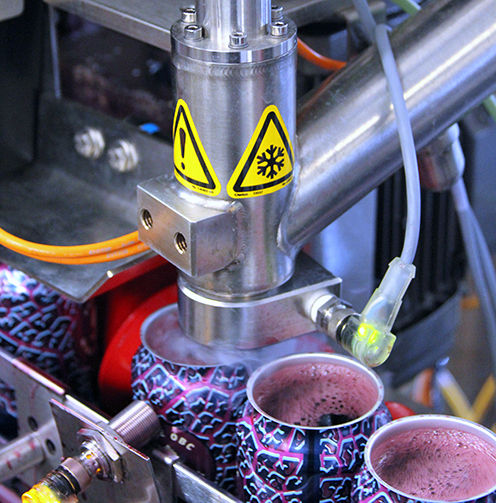
Nitro Doser

Tool Box
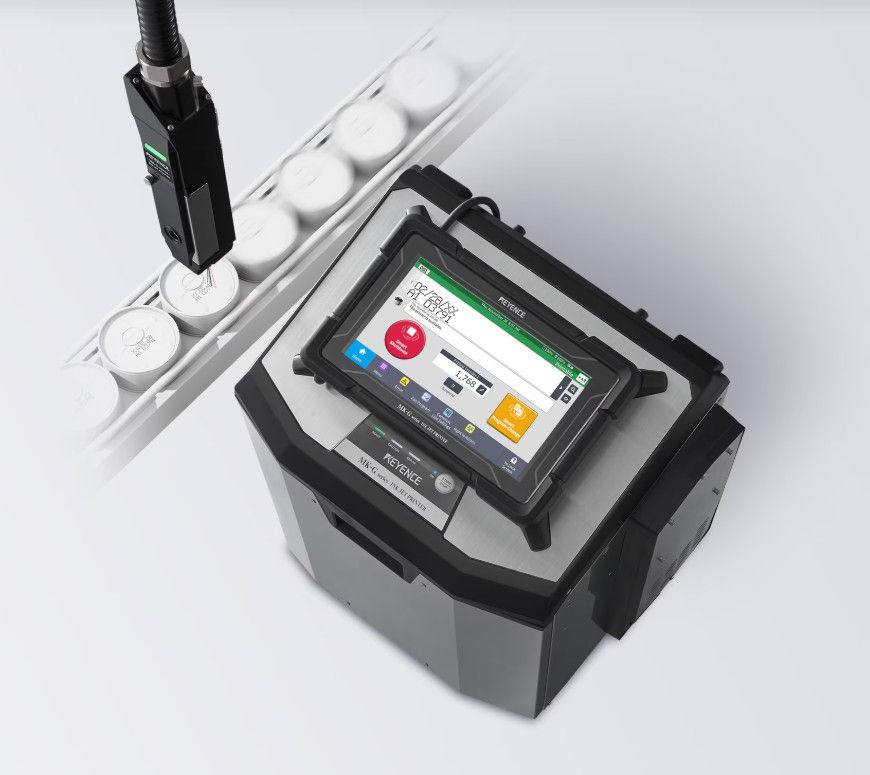
Date Coder

CO2 Tunnel

CO2 PrePurge

Foam Jetter

Rinse Tunnel

Blower DryOff
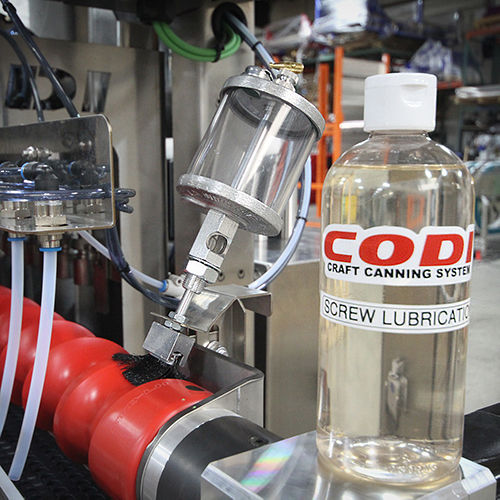
Lubrication System
FAQ
Does ionized air clean as well as a water rinse?
Ionized air targets the mechanism that makes debris stick. A water rinse can leave condensation inside the can, which complicates filling and requires a dry-off step. Air rinsing removes dust, cardboard fibers, and manufacturing residues without introducing moisture into the container.
What line speed does the Ionized Air Rinser support?
Single-lane configurations handle up to 1,200 CPM, and dual-lane systems reach up to 2,400 CPM. Speed is VFD controlled so the rinser tracks line pace precisely.
Can the Ionized Air Rinser be integrated into an existing line?
Yes. It mounts directly to standard cable conveyor track, whether supplied by CODI or existing on your floor. That footprint efficiency lets you upgrade cleaning capability without re-layout.
What is the difference between the Ionized Air Rinser and the Twist Rinser?
Both use ionized air to clean cans without water. The Ionized Air Rinser mounts over an inline vacuum or grip conveyor, while the Twist Rinser uses a mechanical twist cage to invert the can over an air manifold before righting it.


