
Vacuum Loop Can Rinser


VACUUM LOOP RINSER
Vacuum loop can rinser | ionized air can cleaning | high-speed pre-fill container cleaning for beverage packaging lines
The CODI Vacuum Loop Rinser cleans empty cans with ionized air while a vacuum conveyor holds cans in place, so there is no track, no side grippers, and simple changeover between can sizes. The patented loop path extends travel distance to increase dwell time and vacuum exposure, which matters for taller containers and heavier debris loads. Single-lane systems run up to 1,200 CPM and dual-lane systems up to 2,400 CPM under VFD control. A single loop occupies 28 feet by 3 feet at 16 feet tall. Single loop, dual loop, and S-loop configurations are available in 304 stainless steel. Where floor space is the constraint, the Vacuum S Rinser delivers the same vacuum conveyance in a shorter footprint. No water means no residual moisture, no drying step, and no drainage to manage between the depalletizer and the filler.
The CODI Vacuum Loop Rinser cleans empty cans with ionized air while a vacuum conveyor holds cans in place, so there is no track, no side grippers, and simple changeover between can sizes. The patented loop path extends travel distance to increase dwell time and vacuum exposure, which matters for taller containers and heavier debris loads. Single-lane systems run up to 1,200 CPM and dual-lane systems up to 2,400 CPM under VFD control. A single loop occupies 28 feet by 3 feet at 16 feet tall. Single loop, dual loop, and S-loop configurations are available in 304 stainless steel. Where floor space is the constraint, the Vacuum S Rinser delivers the same vacuum conveyance in a shorter footprint. No water means no residual moisture, no drying step, and no drainage to manage between the depalletizer and the filler.
PRODUCT FEATURES
Loop Configuration for Extended Dwell Time
The loop path increases time under vacuum and ionized air exposure compared to a straight-through rinser. Better debris removal for taller containers, denser can populations, or environments with higher particulate levels.
No Tracks, No Adjustments
Vacuum conveyance holds cans on the belt without side grippers or tracks. No mechanical adjustments needed when switching can sizes.
Waterless Operation
Ionized air only. No water supply, no drainage, no residual moisture risk, and no added dissolved oxygen exposure before filling.
Configurable Layout
Single loop, dual loop, and S-loop configurations available. Customizable entry and exit heights for integration into existing line layouts.
PRODUCT INFORMATION
Patented Loop
Single 1,200 CPM, Dual 2,400 CPM
Easy Adjustments
Performance & Speeds
Throughput Capacity (Single Lane): Up to 1,200 CPM (72,000 CPH) continuous
Throughput Capacity (Dual Lane Option): Up to 2,400 CPM (144,000 CPH) continuous
Container Compatibility: Aluminum beverage cans (Standard 202/211, Sleek 202/204, Slim 200/202, King Cans up to 24 oz / 750 mL), aluminum bottles, and PET containers
Changeover Adjustment: 100% tool-less and change-part free—accommodates all container diameters and heights on the same belt with zero mechanical adjustment
Inversion Geometry: Continuous overhead vertical loop incline/decline (inverts cans open-end down over cleaning manifold, then returns upright for filling)
Physical Dimensions & Elevation
Dimensions (L × W × H): Modular footprint sized to order based on facility layout and ceiling clearance (Standard layout: approx. 321" L × 138" W including blower skid; upper TOC approx. 170", lower TOC approx. 40"–50")
Infeed Tin Line Height: Sized to match overhead depalletizer single-filer elevation (typically 120" to 170"+)
Discharge Tin Line Height: Matches filler deck height (nominal 40" to 50" / 1,016 mm to 1,270 mm)
Ceiling Clearance Requirement: Sized to job-specific infeed elevation; ensures clearance above overhead loop transitions
Frame Construction: Heavy-gauge AISI 304 stainless steel welded tubular framework with heavy-duty stainless leveling feet
Vacuum & Pneumatic Utilities
Vacuum Blower System: High-efficiency industrial backward-inclined centrifugal exhaust blower sized specifically for continuous suction load
Operating Vacuum Suction: 4.5 to 5.0 in. w.g. (inches of water column) continuous vacuum pressure
Vacuum Monitoring: Dwyer Minihelic differential pressure gauge (0–10" w.g.) paired with digital IFM IO-Link electronic vacuum sensors
Compressed Air (for Ionized Air Rinser):Operating Pressure: 20 to 40 PSI regulated at machine (facility supply 100–110 PSI constant)
Air Consumption: 8 SCFM clean, dry compressed air meeting ISO 8573-1:2010 Class 2
Connection: Dedicated 1/2" ID air drop (3/4" ID recommended) to 1/4" NPT female automotive coupler
Electrical Supply & Controls
Electrical Supply:380–500 VAC, 3-Phase, 60 Hz (Standard)
208–240 VAC, 3-Phase, 60 Hz (available upon configuration)
Motor Drives: Inverter-ready high-torque SEW Eurodrive gearmotors paired with independent Schneider Electric Variable Frequency Drives (VFDs)
Control Architecture: Standalone or networked PLC automation featuring an 8-Port IFM IO-Link Master, Keyence optical sensors, and color touchscreen HMI
Rinsing & Cleaning Systems
Inline Ionized Air Can Cleaner: Keyence pulse AC static-neutralizing ionizer bar positioned directly within the inverted loop to strip static charges and release dust, box lint, and cardboard fibers.
Positive/Negative Dual-Blower Extraction: Dual-blower design combining positive ionized air injection with a negative-pressure vacuum exhaust blower and dual HEPA filtration to trap airborne debris outside the packaging hall.
Liquid Sanitizer / Water Rinse Manifold: Stainless steel spray nozzles, drip collection pans, and dedicated sanitary NPT gravity drain connections for wet rinsing applications.
Line Speed & High-Volume Upgrades
Dual-Lane High-Speed Configuration: Parallel dual-lane vacuum belts providing throughput speeds up to 2,400 CPM for commercial packaging lines and high-speed rotary canning operations.
Active Crash & Downed-Can Detection: Infeed, loop, and outfeed optical sensor arrays that monitor container flow and instantly halt conveyance if a tipped or misaligned can is detected.
Under-Can Date Coder Integration: Pre-engineered mounting brackets and open-access viewports for Videojet or Keyence continuous inkjet (CIJ) or laser printers to code can bottoms while inverted.
Logistics, Mounting & Connectivity
Network Ethernet Handshake (PDI/PDO): Integrated Ethernet/IP or Modbus TCP hardware allowing the loop rinser to synchronize directly with rotary fillers, line demand sensors, and depalletizers.
Hanging Conveyance & Ceiling Supports: Factory-engineered suspension brackets and wall ties to stabilize elevated infeed lines without crowding floor space.
Tiered Spare Parts Packages: Curated maintenance kits (perforated vacuum belts, wear strips, blower bearings, and optical sensors) to maximize line uptime.
Continuous High-Speed Loop Inversion
Designed specifically for high-speed commercial canning lines running beyond the physical speed thresholds of gravity twist tracks or mechanical wedge lowerators.
Takes cans smoothly from overhead single filers, carries them through an inverted loop for debris purge, and returns them upright to filler conveyor level in one continuous, uninterrupted motion.
Eliminates the can tipping, jamming, and denting common when high-speed lines transition through aggressive gravity curves.
Universal Container Handling with Zero Change Parts
Handles standard 12 oz, 16 oz, sleek, slim, and king cans on the exact same belt without swapping change parts or adjusting mechanical track widths.
Powerful negative-pressure suction holds the container base securely against the perforated conveyor belt regardless of can diameter or wall thickness.
Completely eliminates changeover tooling costs and slash format change downtime to zero.
Gentle, Friction-Free Container Control
Containers are held firmly by atmospheric vacuum pressure across their base rather than pinched along their sidewalls by mechanical rubber gripper chains.
Protects lightweight aluminum can walls from denting and eliminates friction scuffing on delicate shrink sleeves, digitally printed cans, and matte finishes.
Controlled Can Spacing & Neck Protection
Independent VFD speed control allows operators to tune the speed differential between the infeed conveyor and the loop belt, establishing an optimal ~2-inch gap between containers.
Prevents container necks from colliding or binding as they traverse the loop curve, guaranteeing perfect alignment across the ionized cleaning zone and outfeed deadplate.
Waterless Cleaning & Zero Dissolved Oxygen (DO) Pickup
Inverts cans 180° over the ionized air cleaner so gravity and ionized air work together to evacuate particulate from the container dome without liquid water.
Keeps the container interior completely dry before reaching the fill valves—preventing residual water droplets from diluting product or introducing dissolved oxygen (DO) into the beverage.
Industrial Automation & Multi-VFD Synchronization
Intuitive color touchscreen HMI provides independent digital speed tuning (Hz) across infeed, rinser loop, and blower drives.
Built-in debounce sensor logic and downstream backup detection automatically throttle or pause the loop when packaging equipment backs up, eliminating line chatter and container starvation.
Constructed from heavy-duty AISI 304 stainless steel with sealed System Plast aircraft-grade bearings that require no routine lubrication.
ACCESSORIES
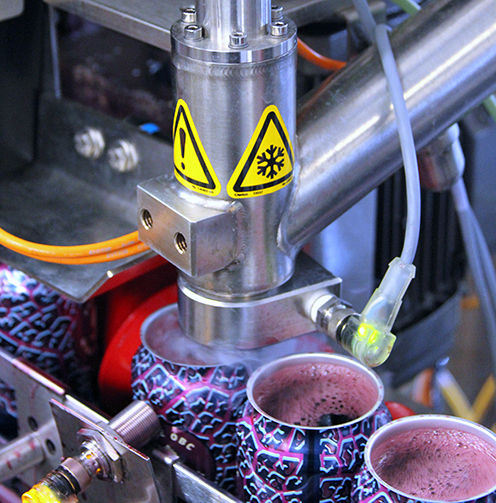
Nitro Doser

Tool Box
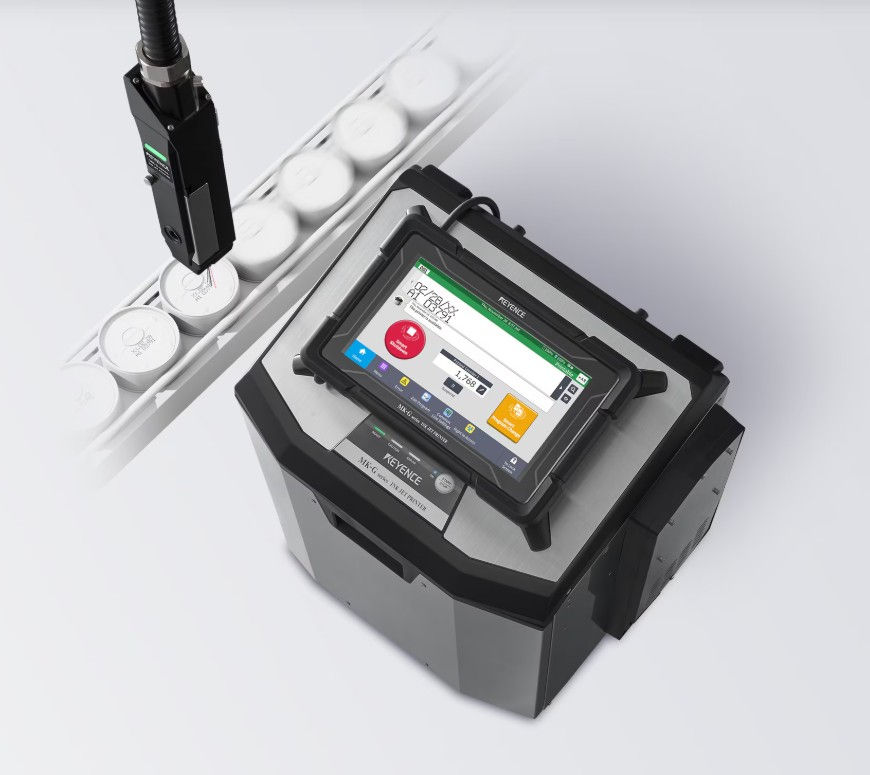
Date Coder

CO2 Tunnel

CO2 PrePurge

Foam Jetter

Rinse Tunnel

Blower DryOff
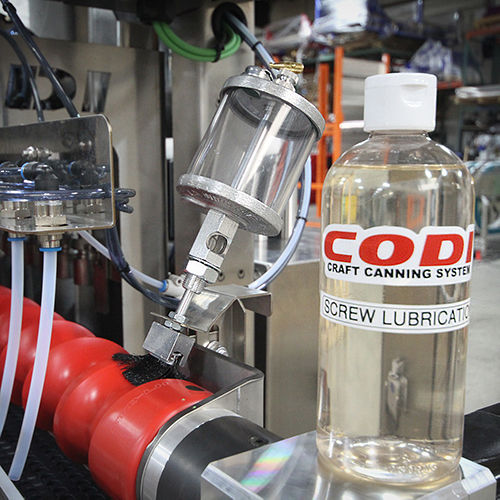
Lubrication System
FAQ
Why use a loop path instead of a straight vacuum rinser?
The loop extends the distance the can travels while held on the vacuum conveyor, which increases dwell time under ionized air. That added exposure matters for taller containers, where debris has farther to travel to clear the opening, and for lines running cans carrying heavier corrugate fiber loads.
Does the Vacuum Loop Rinser need change parts for different can sizes?
No. The can is held against the vacuum conveyor rather than guided by a track or side grippers, so there are no rails to reposition and no parts to swap. Changing between container diameters and heights requires no mechanical adjustment.
What throughput does the Vacuum Loop Rinser support?
Single-lane configurations run up to 1,200 CPM and dual-lane configurations up to 2,400 CPM. Speed is VFD controlled and specified at order alongside infeed and outfeed tin line heights. Category 3 safety rating is available and requires a UL panel.
How much floor space does it require?
A single loop occupies roughly 28 feet in length and 3 feet in width, standing 16 feet tall. A dual loop holds the same length and height at 6 feet wide. Where ceiling height or floor length is constrained, the Vacuum S Rinser provides vacuum conveyance cleaning in a shorter footprint.


